What is Odysseus AI? (PewDiePie-Inspired AI Tool Without Coding)
Odysseus AI is a fully-managed cloud workspace inspired by the same privacy-first principles as PewDiePie's open-source Odysseus — no Docker, no GPU, no coding required.
So you Googled "what is Odysseus AI" — and now you're staring at a mix of open-source repos, PewDiePie clips, and AI tool listicles that don't actually explain what this thing is or how to use it.
This post will fix that. In plain language, no fluff.
The Short Answer
Odysseus is a brilliant open-source AI research engine created by PewDiePie — zero telemetry, fully private, runs on your hardware. Odysseus AI is an independent, fully-managed cloud workspace built on the same privacy-first principles. We're not a hosted fork of PewDiePie's repo — we're a standalone product inspired by the same vision: private, structured AI research with zero telemetry. Odysseus AI lets anyone get that experience instantly — zero setup, zero sysadmin.
Here's what Odysseus AI gives you:
- 1-Click Setup. Sign up, open your browser, start researching. No terminal, no Docker, no
.envfiles. - Bring Your Own Model. OpenRouter integration built in, with optional BYOK for full control over how your prompts are routed.
- Zero Local Hardware. No GPU, no fan noise, no $2,000 rig. Infrastructure runs in the cloud so your laptop stays cool.
Open-Source vs. Managed: At a Glance
| Feature | PewDiePie's Odysseus (Open-Source) | Odysseus AI (Managed Cloud) |
|---|---|---|
| Setup Time | Hours (Docker, APIs, dependencies) | 60 seconds |
| Hardware Required | Dedicated GPU (24GB+ VRAM recommended) | None (runs in browser) |
| Cost | Free (excluding hardware & API costs) | Starts at $19/month |
| Maintenance | Manual (updates, breaking changes) | Fully managed |
Why the Odysseus Engine is Trending (vs. Claude & NotebookLM)
PewDiePie didn't build Odysseus because existing tools are bad. He built it because each one is missing a piece.
NotebookLM gets the structure right, but locks you in. Google's tool pioneered the multi-document research UI — drop in sources, get structured summaries with citations traced back to the original material. For casual research, it works. But it's closed-source, tethered to Google's ecosystem, and your data flows through Google's infrastructure. If you're researching anything sensitive — legal strategy, competitive intelligence, medical records, unpublished work — you're trusting Google's data policies with material you might not want leaving your machine. There's no way to audit what happens to your inputs, and no option to swap in a different model when Gemini isn't the right fit.
Claude gets the reasoning right, but wasn't built for this workflow. Claude is arguably the strongest reasoning model available today — nuanced, careful, genuinely good at synthesis. But a chat interface is a chat interface. Paste five PDFs into a conversation, ask follow-up questions across all of them, and by the third exchange you're managing context manually — re-pasting sources, reminding the model what it said earlier, losing track of which claim came from which document. Claude doesn't produce a structured source table. It doesn't let you save and organize references across sessions. The model is excellent; the container around it isn't designed for multi-source research.
The Odysseus concept combines both. NotebookLM's structured research interface — source ingestion, cited briefs, traceable claims — with the freedom to choose your own model. Claude, GPT-4o, Gemini, or a local model on your own hardware. The architecture is model-agnostic by design. Your sources, your model, your data flow.
The privacy model is what made the developer community pay attention. Zero telemetry. No analytics pinging external servers. The open-source code is fully auditable — every network call is readable, and nothing leaves your environment without your explicit action.
That's the concept. Take the best UI pattern (NotebookLM), plug in the best brain (Claude, or whatever you prefer), and keep the data pipeline private.
The reason it went viral isn't complicated: nobody else ships all three.
The Self-Hosting Reality: Docker, GPUs, and .env Files
The open-source Odysseus engine is built for developers who run their own infrastructure. If that's you, the repo is well-structured and the documentation is solid. But if your job title says "researcher," "analyst," or "strategist" — not "DevOps engineer" — the setup cost is worth understanding before you commit a weekend to it.
The setup tax is real. Deploying a local AI workspace means configuring Docker containers, cloning repositories, and populating a .env file with API keys from multiple providers — each with its own dashboard, its own key format, its own billing page. One variable expects a full base URL with a port number. Another expects a raw key string. A third ships with a placeholder value that looks valid but isn't. The error messages when something is misconfigured rarely tell you which variable is wrong. For a developer, this is Tuesday. For a researcher on a deadline, it's an unpaid detour into infrastructure management.
The hardware math doesn't add up for most teams. Running top-tier models locally — the ones that produce research-grade output — requires dedicated GPU hardware with 24GB+ of VRAM. That's a $1,500–$3,000 investment in a workstation that does nothing else well. On a standard laptop with 8GB of VRAM, a 7B parameter model returns responses in thirty to forty seconds, drains battery at visible speed, and pushes fans to the kind of volume that makes Zoom calls impossible. Most researchers don't have — and shouldn't need — a rack-mounted GPU to synthesize five PDFs into a source table.
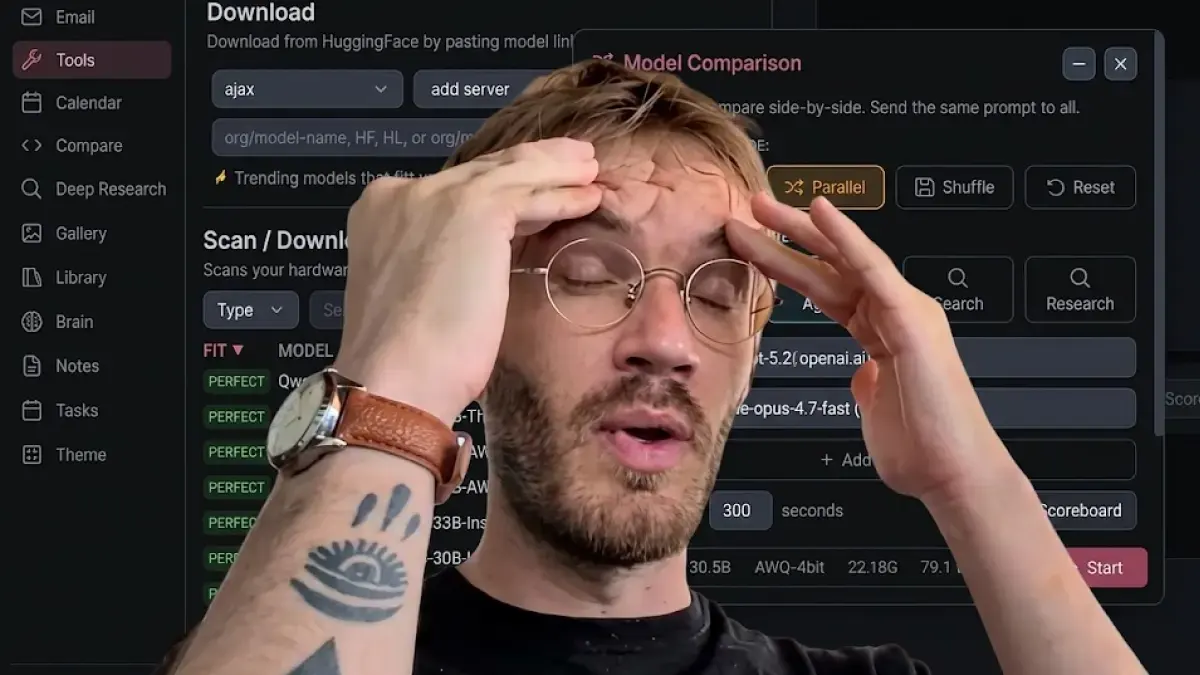
If you want to see exactly what happens when a standard user tries to run the viral open-source version locally, check out our full breakdown of PewDiePie's Odysseus AI tool.
The bottom line is ROI. Every hour spent debugging container orchestration or rotating expired API keys is an hour subtracted from the work that actually moves your research forward. Infrastructure maintenance is a recurring cost, not a one-time setup — models update, dependencies break, Docker images need rebuilding. For professionals whose output is measured in insights, not uptime, the calculus is straightforward: the tool should serve the research, not the other way around.
Odysseus AI: The Managed Cloud Shortcut
Odysseus AI is a fully-managed cloud workspace built on the same privacy-first concept that made PewDiePie's open-source project go viral — but as a standalone product, not a hosted fork. No Docker, no GPU, no .env files. You sign up, open your browser, and start producing research briefs with traceable source tables. The infrastructure, storage, and model routing are handled on our side.
Model routing runs through OpenRouter. That gives you access to Claude, GPT-4o, Gemini, and dozens of other models out of the box — choose the right brain for each research task without managing API keys for every provider individually. If you want full control over how your prompts are routed, optional BYOK (Bring Your Own Key) is built in. Connect your own OpenRouter API key and every request flows through your account, your billing, your data retention settings.
Your data stays private. Each workspace is isolated. Odysseus AI never trains on your inputs. Managed requests use zero-data-retention routing where supported, and the same privacy-first architecture that inspired the open-source project is built into Odysseus AI from the ground up.
The pricing math is simple. Plans start at $19/month for Starter, with Pro ($39/month) and Max ($79/month) tiers for heavier research volume. Switch to yearly billing and save 17%. All plans include a 30-day money-back guarantee.
Compare that to the alternatives. A cloud GPU instance runs $1–3/hour — ten hours of setup and testing costs $30 in compute alone, and you still might not have a working environment. A dedicated local GPU rig starts at $1,500 before electricity. A single wasted weekend debugging Docker is worth more than a year of Starter. The ROI isn't close.
You're paying to skip the infrastructure and go straight to the output.
Get Your Workspace Running in 60 Seconds
Three steps. No terminal.
- Pick your plan. Starter, Pro, or Max — choose based on how many research briefs you need per month. Yearly billing saves 17%.
- Log in to your private workspace. Open your browser, hit your dashboard. No installs, no config files, no dependencies.
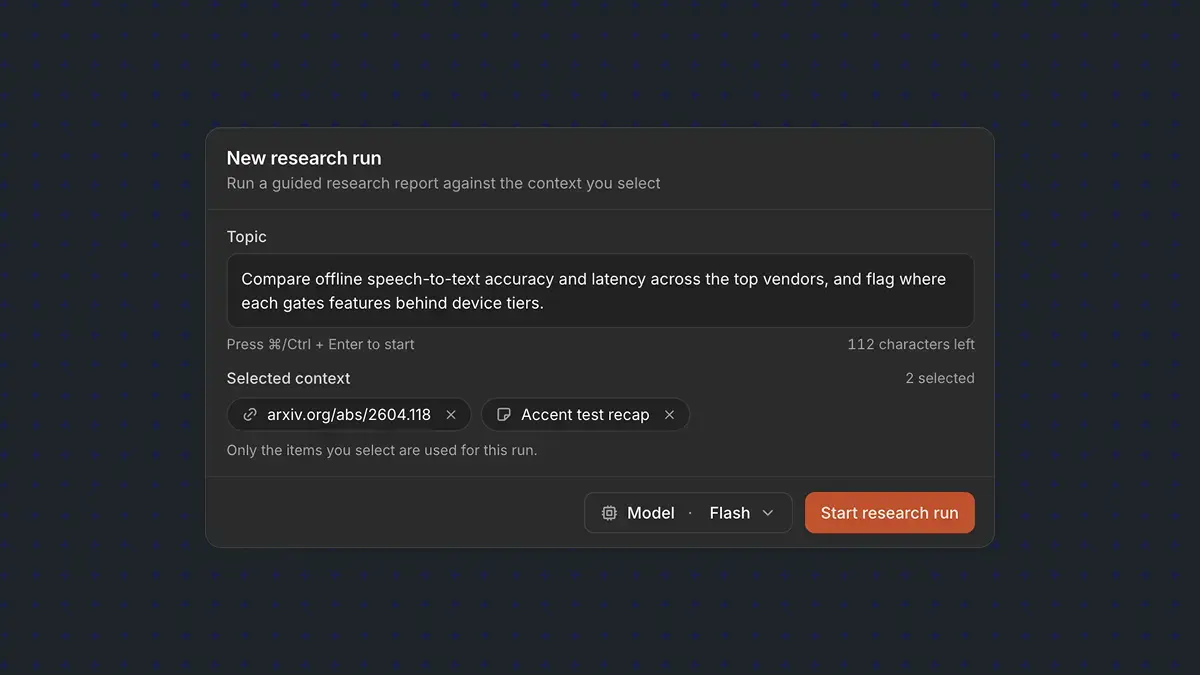
- Add sources and get your first brief. Drop in URLs, PDFs, or notes. Odysseus AI produces a structured research brief with a traceable source table — every claim linked back to the original material.
That's it. The time between signing up and holding a finished research brief is measured in seconds, not weekends.